A named coach, from day one
Every apprentice has a named TLC learning coach who plans the programme, teaches, reviews progress and stays for the whole journey. The coach is the constant, and they know the sector because they have worked in it.
How we deliver
Every TLC apprenticeship runs on one relationship: the learner and their coach. Everything else we have built exists to make that relationship stronger: the academies and partners, our own learning books and handbooks, live progress tracking, and TLC Base, the one place where learners, employers and our team meet.

The model
An icon raises aspirations; a skilled educator helps someone achieve them. So we put the coach at the centre, bring the experts in alongside, and make the employer a partner at every stage.
Every apprentice has a named TLC learning coach who plans the programme, teaches, reviews progress and stays for the whole journey. The coach is the constant, and they know the sector because they have worked in it.
Masterclasses, demonstrations, resources and practical challenges from our academies and partners are built into the programme. Core learning stays clear and manageable; expert content deepens it rather than overwhelming it.
Training plans co-designed with the employer, three-way reviews at least every twelve weeks, and programmes shaped around the organisation’s own values and frameworks, so what is learned applies on Monday morning.
The TLC learning approach
Our approach begins with the learner’s role and the employer’s context. We connect the knowledge a programme requires with the situations people encounter at work, then support them as they build understanding and confidence.
People engage more meaningfully when they understand why a subject matters. We want learners to see the connection between their programme, their responsibilities and the opportunities ahead of them, so each stage of learning has a place in a bigger picture.
Specialist practitioners help people see how knowledge is used, how professional judgement develops and what excellent practice demands. A masterclass, a specialist resource or a discussion of real practice each has value when it helps a learner understand something they can use.
Strong teaching gives people a clear route through unfamiliar ideas: learning broken into manageable stages, understanding checked, new knowledge connected with what they already know, and room to ask questions without losing sight of the standard.
Knowing an answer and making a sound decision at work are connected through practice. Learners consider how their learning applies to real situations, reflect on the choices they make and use feedback to improve. Progress becomes visible in what they can explain and do.
Confidence, previous experience and learning needs influence how people progress. The relationship with a learning coach gives that progress direction, with clear expectations and useful feedback so people recognise what they have achieved and where to focus next.
Digital learning should make useful resources easier to reach and give people opportunities to revisit ideas. We develop our technology around those purposes, alongside the human guidance that helps learners interpret information and keep moving forward.
Learners should encounter ideas that expand their horizons while building a secure understanding of the knowledge and skills their programme requires. Specialist enrichment deepens learning in a way that is relevant to the learner’s stage.
How we teach
Off-the-job learning is not a classroom and not a day off site. It is structured learning inside the work your team already does.
A named skills coach runs every assessment, with the learner and with you.
What happened, why, and what changes next shift.
Defending a decision out loud, as the assessment will ask them to.
The question is never only “which procedure”. It is “who is this for”.
A real problem in their workplace, measured.
Cohort webinars where learners put a question directly to the people at the top of their field.
Short and frequent, on a phone, with the coach one call away.
An audience with the expert for each cohort, addressing your setting and your people.
Our experts learned by watching, doing, failing and asking why. That is the method, made teachable.
The tools we have built
We build our own tools so the experience is ours to design, and every one of them exists to improve access, personalise support and help coaches see progress. Technology is never the purpose in itself.
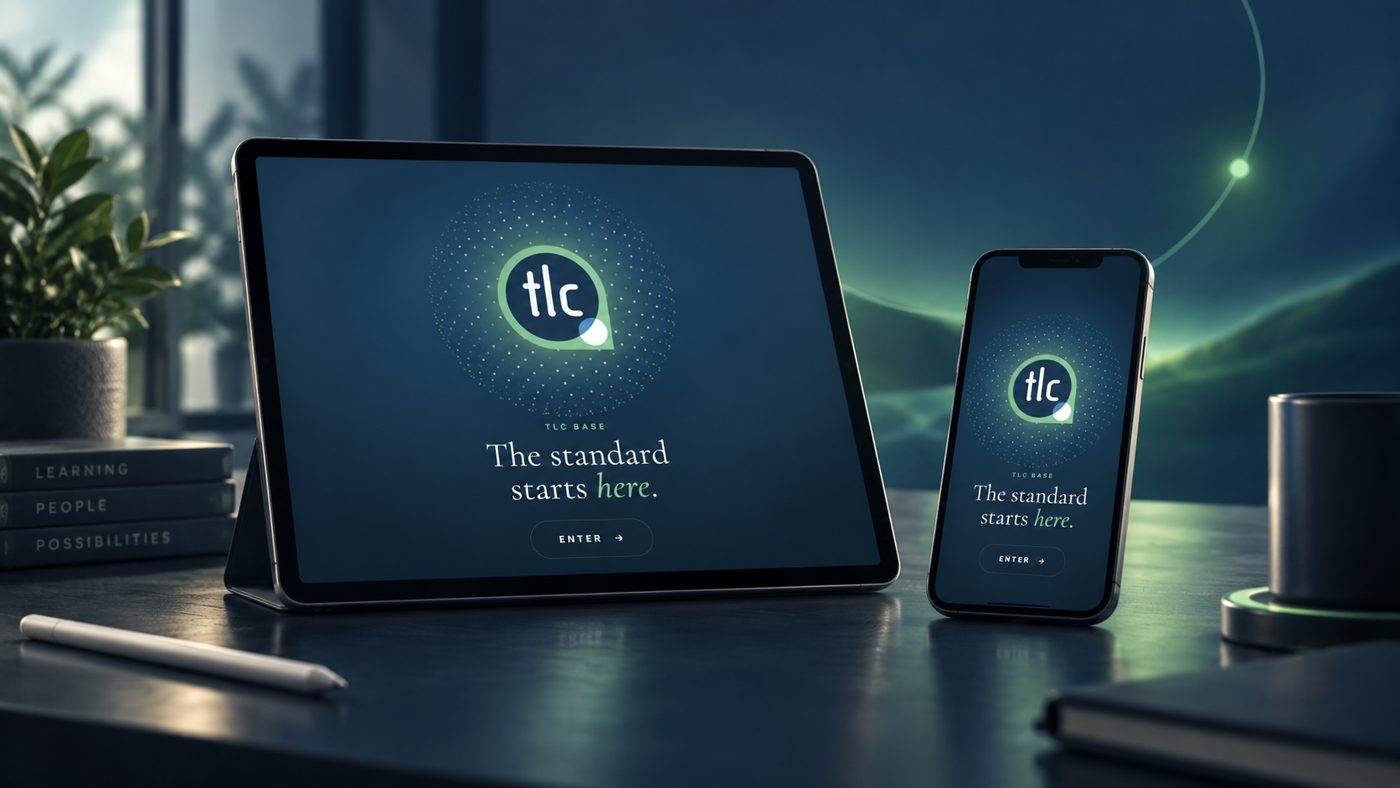
One door for learners, employers and our team.
The portal where everyone on a programme meets: progress, resources, reviews, the people to contact and the tools behind the apprenticeship, in one place, on any device, with an area built for each sector we teach.
Written for each programme, by TLC and its academies.
Structured curricula and learning books that carry the experts’ voice consistently across every cohort. In culinary, the Learning Collection runs to eight volumes and eighty-one chapters in Marco’s voice. In care, the Learn Care Excel Care Training Series gives every learner a practical course book, from consent and capacity to the standards behind good care. Learners keep their books for life.
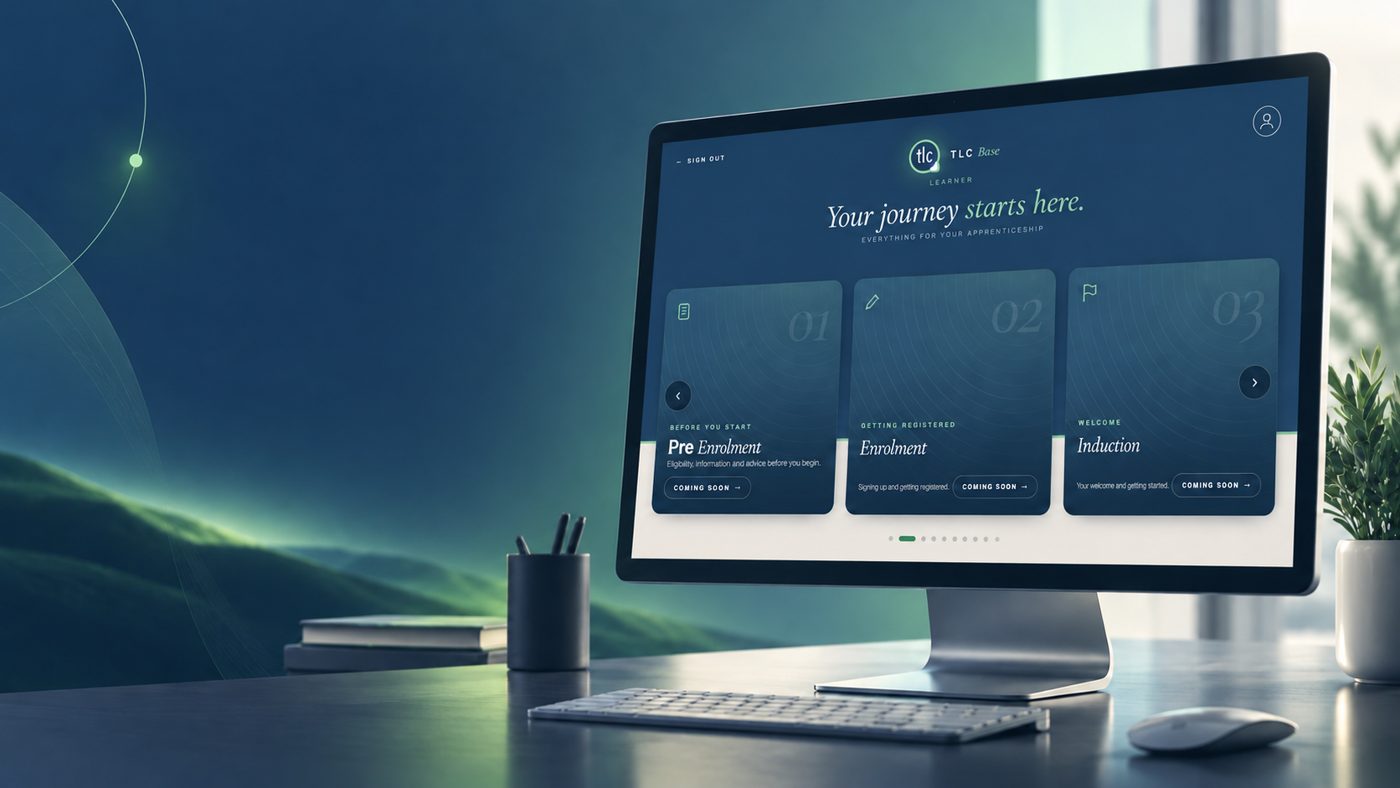
Coach, employer and learner see the same picture.
Every stage of the journey, from pre-enrolment to progression, with progress, off-the-job hours, evidence and reviews tracked as they happen. The early signs of a learner needing more support are seen early, and the calendar is in one place.
From vision to action, from day one.
A photo-led handbook every apprentice receives on their first day: the standard we set, how the apprenticeship works, safeguarding and support, their sector, their employer and their own starting point.
Recorded expertise learners can return to.
Masterclasses, demonstrations, micro-learning and resources delivered through our digital learning platform, so a learner on a night shift has the same access as one in the classroom.
A safeguarding lead every learner can reach.
Safeguarding, Prevent and wellbeing run through every programme, with a Designated Safeguarding Lead a call away and safer-recruitment and safeguarding systems behind our processes.
Developed with Sonoro AI and StreamLearn, the technology companies in our group, against global standards for learning technology, always with human oversight.
The honest bit
The one thing an apprenticeship asks of an employer is time. We plan it, we protect it, and we put it in your diary before it costs you anything.
Expectations
Every programme is a three-way agreement, and everyone knows their part before the first day.
The outcome
Whatever the level and whichever the sector, four things are non-negotiable.
The national standard, assessed independently, with a coach who has known their workplace since day one.
Learning books written for the programme, in the expert’s own voice, and theirs for life.
Closed sessions with leading figures in their profession, built into the programme rather than added to it.
The next level, role or programme agreed before the certificate arrives, so development does not stop at the end.
The journey
Every stage has a named owner and a record the learner and the employer can both see. Nobody drifts.
The right programme, agreed by all three of us.
Honest advice, a skills scan of the starting point, and a training plan signed by learner, employer and TLC before induction begins.
Learning that happens in the work.
At least six hours a week of protected learning, evidence gathered as the work happens, and a review with the employer at least every twelve weeks.
Ready before gateway, not after.
Readiness agreed by all three parties, independent end-point assessment, and a clear route back if a first attempt does not go to plan.
The next step, planned early.
The next level, role or programme is agreed before the certificate arrives, and the relationship continues through masterclasses, courses and the learning library.
See it for yourself
We will walk you through a programme, the learning books and TLC Base, and answer the questions you have not asked yet.